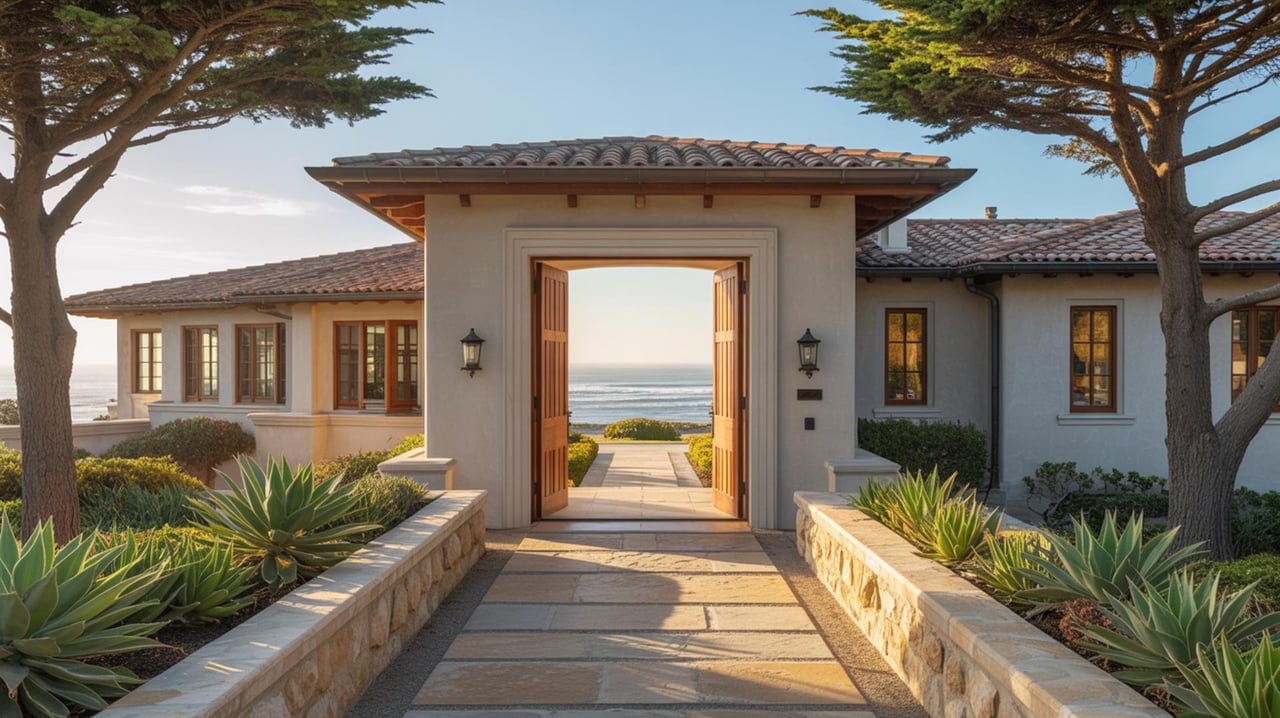
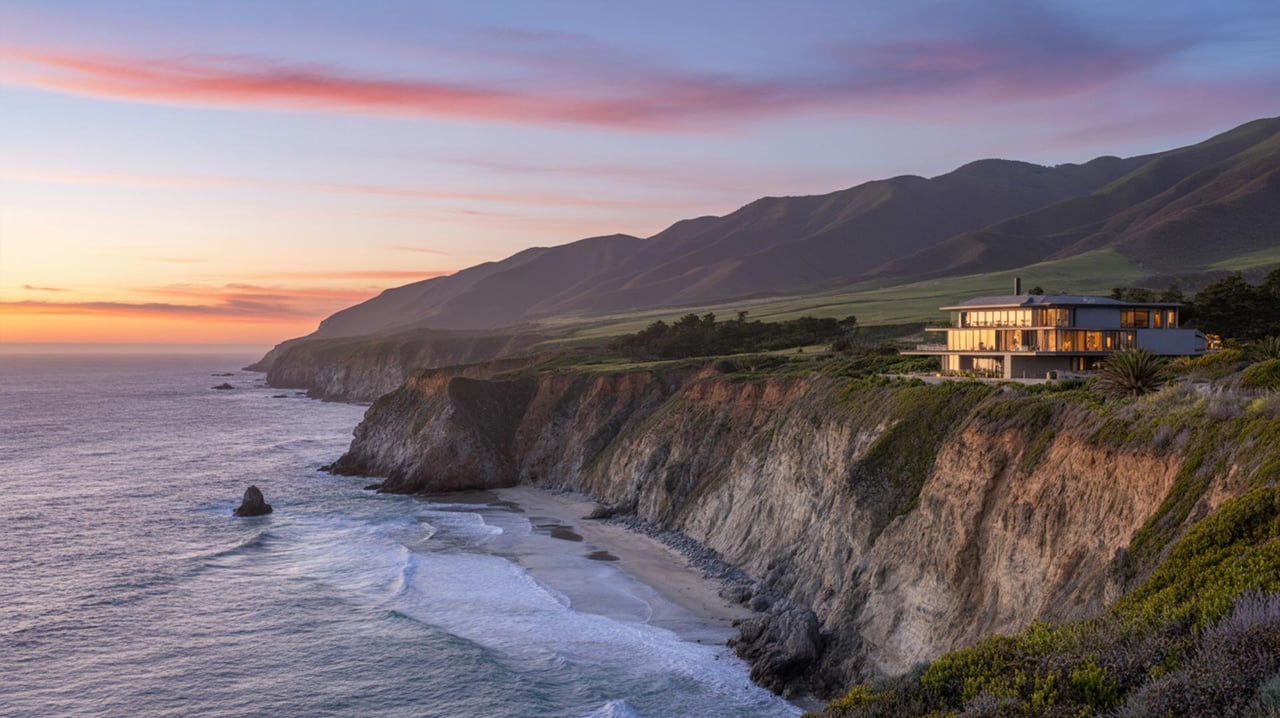
Selling inside the Santa Lucia Preserve is not a typical Carmel sale. Your property lives within a conservation-first plan that shapes what you can build, plant and market. If you prepare the right documents and set clear expectations, you can reduce friction, protect your price and give buyers confidence. This guide shows you exactly what to assemble, how timing works and how to present your stewardship story so your sale moves smoothly. Let’s dive in.
What makes the Preserve different
Homelands and Openlands
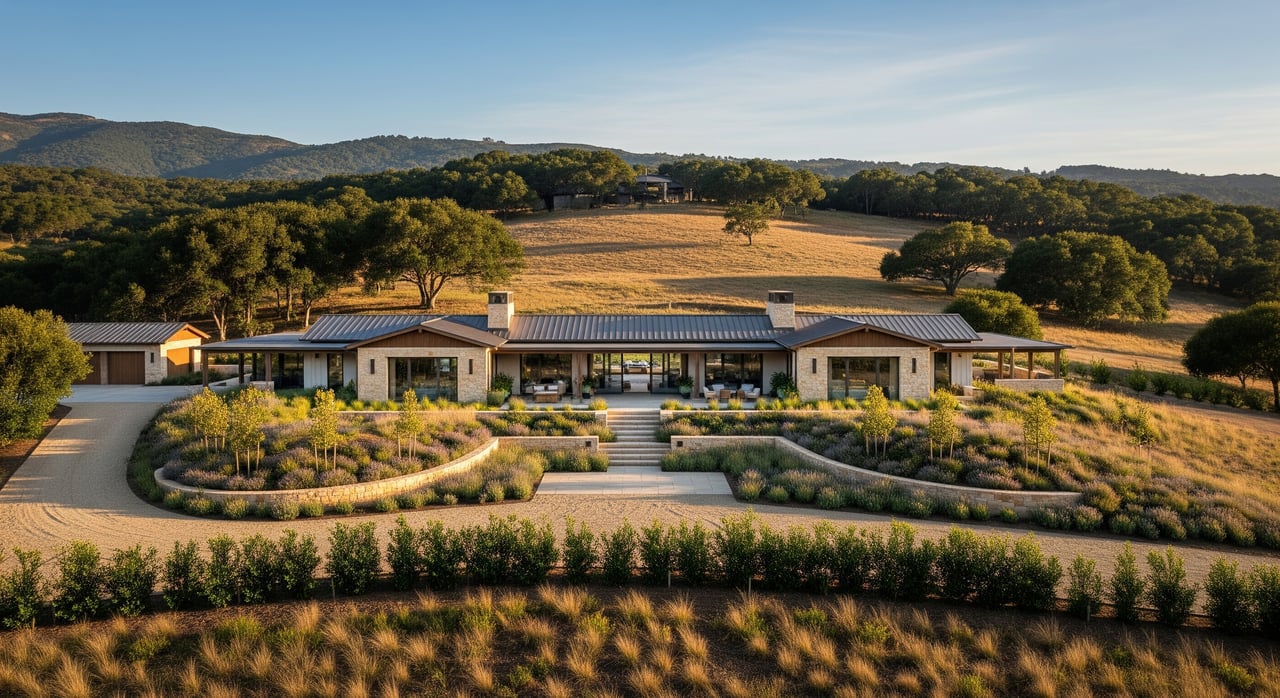
The Preserve spans roughly 20,000 acres, and about 90% is permanently protected Openlands. Your residence sits within a recorded building envelope called the Homeland, and everything outside it is protected Openlands. These restrictions run with the land and are enforced by the Santa Lucia Conservancy. You should provide buyers with the recorded Deed of Conservation Easement and the community’s Declaration of Protective Restrictions so they can understand the rights and obligations tied to your parcel. You can read more about how Openlands and conservation easements work on the Conservancy’s overview page at Openlands and conservation easements.
If a buyer wants to shift a Homeland boundary, even modest adjustments usually require a county-level Final Map amendment or certificate of correction plus environmental review. That kind of change often adds months and involves coordination with Monterey County and the Conservancy. The Preserve’s historical plan and approvals history explain why envelope changes are treated carefully. See the original planning framework in The Preserve Plan (1999).
Design review and memberships
The community runs its own design and construction guidance to protect conservation values. Design Review is separate from Monterey County review and will influence siting, exterior materials and landscape choices. Club memberships, including the Ranch Club, Golf Club, Hacienda access and equestrian privileges, are often separate agreements. They do not automatically transfer with title unless your paperwork says so. Confirm transfer rules and timing early. For a helpful overview of real estate and membership separation, see the Preserve’s public-facing page on real estate at the Preserve.
Utilities and the CSD
Water is provided by the registered Santa Lucia Preserve water system, and some lots rely on on-site septic for wastewater. Lenders and buyers will ask for current water and wastewater records, especially for underwriting. You can confirm system details in the state database for the Santa Lucia Preserve Water System. The Santa Lucia Preserve Community Services District supports certain services, so keep those records handy as well.
What to assemble before listing
Create a clean, complete packet before you hit the market. It speeds diligence, reduces renegotiations and builds trust.
Title and recorded maps. Order a recent preliminary title report. Pull the recorded Deed(s) of Conservation Easement, the Declaration of Protective Restrictions, and the Final Map that shows your Homeland and Openlands, plus any certificates of correction or amendments. The Conservancy can help locate certain easement exhibits; learn why these instruments matter on the Conservancy’s page about Openlands and conservation easements.
Permits, design approvals and as‑builts. Gather all Design Review approvals, county building permits, finals, as‑built plans and any code or enforcement items. If you adjusted the Homeland in the past, include the full approval record. The county’s documentation for a recent envelope amendment shows the kinds of attachments buyers expect, such as biology and arborist reports. You can see the structure of that record in this county file: Monterey County Final Map amendment example.
Stewardship and wildfire readiness. Include your Openlands Management Plan (OMP), the lot’s Fuel Management Plan (FMP) and recent field reports. The Conservancy partners with landowners on these plans, and updated FMPs signal defensible space and risk mitigation. Learn about owner partnerships at the Conservancy’s landowner partnerships page.
Water and wastewater evidence. Provide recent water bills, any Consumer Confidence Report you have, and permits or inspections for wells or septic. The state’s listing for the Preserve system is a useful reference when buyers need confirmation of the utility provider: Santa Lucia Preserve Water System.
Association, CSD and club materials. Assemble CC&Rs, bylaws, current assessments, recent budgets and reserve studies, meeting minutes and any special assessment notices. If a club membership is part of the conversation, include current application and transfer rules. The Preserve’s overview notes the separation between property and membership on its real estate page.
Property condition reports. Consider ordering a home inspection, roof and pest reports, septic inspection or performance certificate, plus electrical, plumbing or structural reports as needed. If recent or planned landscape work touches sensitive areas, an arborist or biology report can get ahead of buyer questions. The county example linked above shows these are standard attachments for review.
Legal and financial files. If you are a trustee or handling a legacy estate, confirm authority to sell and gather trust documents, a trustee certification, property tax statements and basis records if available. California recognizes trustee sale powers but also sets fiduciary duties and documentation requirements. A leading state case summarizes this framework: California Supreme Court on trustee powers.
Landscape and plant lists. Buyers often ask about screening and garden changes. Include the community’s preferred native-plant lists and weed-management guidance to simplify those discussions. Start with the Conservancy’s Preferred Plant List.
Timing and expectations
Normal vs permit-driven timelines
If you are selling an existing, compliant residence and the buyer plans no entitlement changes, you can usually close on a standard residential timeline. The moment a buyer wants to modify a Homeland boundary or trigger new environmental review, plan for months of additional time and multi-agency coordination. Monterey County’s record for a recent envelope amendment shows how this plays out in practice, including Conservancy sign-off and Board approval. Review the public record here: County example of Final Map amendment.
Pricing and appraisal context
Sales in the Preserve vary widely by setting, architecture, improvements and envelope location. Thin inventory means appraisals often rely on a handful of recent local comps plus strong broker opinion. As a general frame, recent years have seen improved homes trade in the mid to high millions, while certain homesites have sold in the mid six figures. Before you set a list price, pair your broker’s valuation with an appraisal that explicitly addresses envelope size, conservation constraints and any club or membership status that accompanies the home.
Marketing options and privacy
In high-end communities, many legacy owners prefer a private or off-market sale. Private marketing can protect confidentiality and reduce traffic, but it may also limit buyer competition. If you choose this route, agree on a clear plan with your broker: buyer vetting standards, a controlled materials packet, and a decision point for moving to wider exposure if necessary. Your listing agreement should align with local MLS rules.
Lead with your stewardship story
In a conservation community, buyers value documented care of the land as much as the home. Put your OMP and FMP up front, along with a clear, labeled map that shows Homeland boundaries versus Openlands. Include recent stewardship reports, native-plant guidance and notes about shaded fuel breaks or mitigation work you have completed. Start with the Conservancy’s landowner partnerships resources and the community’s Preferred Plant List to round out your packet.
A practical roadmap for trustees and legacy sellers
Confirm authority to sell. Review the trust instrument and consult probate or trust counsel to confirm powers, notice requirements and any needed court orders. California law supports trustee sale powers but requires careful documentation. See the state’s summary case on trustee powers.
Engage Preserve-experienced professionals. Retain a broker with Santa Lucia Preserve experience and connect early with a local title and escrow team familiar with Conservancy, Design Review and CSD expectations. The Preserve’s site offers helpful context on real estate in the community.
Order title and assemble recorded instruments. Pull the preliminary title report, Deed(s) of Conservation Easement, Declaration of Protective Restrictions and Final Map with your Homeland exhibit.
Request Conservancy and CSD files. Ask for your OMP, FMP, prior approvals and monitoring records from the Conservancy, and service records from the CSD. These add real value for buyers and insurers; start with the Conservancy’s landowner partnerships.
Commission priority technical reports. If your FMP is due for an update, refresh it. Order an arborist report if tree work is recent or anticipated, a biology reconnaissance if applicable, and a septic inspection or percolation evidence for on-site systems. Use the Preferred Plant List to guide any planting conversations.
Pre-list valuation. Obtain a broker price opinion and consider a pre-list appraisal. Make sure the valuation addresses the Homeland size, Openlands context and membership status.
Build the disclosure packet. Even when certain fiduciary transfers have limited statutory disclosure duties, providing a complete, voluntary packet reduces friction. California’s Transfer Disclosure Statement rules outline exemptions and delivery obligations; review the statute at Civil Code section 1102.6.
Decide your marketing posture. Confirm whether you will launch publicly or privately. If private, set standards for buyer qualification, access to materials and an agreed pivot date to broaden exposure.
Plan escrow logistics early. Clarify payment of assessments, HOA estoppels, membership transfer steps, title exceptions tied to easements and any CSD or Conservancy conditions that should appear in escrow language. The Preserve’s overview of how real estate works here can help set expectations.
Prepare the stewardship handoff. Create a concise buyer orientation with OMP and FMP schedules, approved plant lists and Conservancy contacts so onboarding feels smooth and organized. Use the Conservancy’s landowner partnerships page as your baseline.
How La Tierra supports your sale
You deserve a team that speaks the Preserve’s language. La Tierra pairs institutional Santa Lucia Preserve knowledge with Compass’s premium marketing and distribution. That means you get curated storytelling that respects privacy, technical clarity that reduces risk and a hands-on team that manages the details.
- Institutional Preserve expertise. Our team understands Homelands, Openlands and the Conservancy’s stewardship framework, so we help you assemble the right documents and anticipate review questions.
- Discreet, boutique service. For legacy sellers and trustees, we design a tailored marketing plan, whether you need a quiet introduction or a polished public launch.
- Premium creative and platform leverage. We produce high-end materials that present both lifestyle and stewardship and use Compass’s national platform to reach qualified buyers.
- Technical coordination. We work alongside your counsel, title, Conservancy and CSD contacts to keep timing and deliverables on track.
Next steps
If you are considering a sale in the Santa Lucia Preserve, start by assembling the documents above and choosing the marketing posture that fits your goals. Then align with a Preserve-savvy team to package your stewardship story and manage timing. When you are ready, we are here to help you move confidently and discreetly. Connect with La Tierra to discuss your timeline, review your documents and Book a Tour.
FAQs
Do conservation easements block a sale in the Preserve?
- No. They are recorded restrictions that run with the land and must be disclosed, but they do not prevent a sale; see the Conservancy’s overview of Openlands and conservation easements.
What is a Homeland and can I move it before selling?
- The Homeland is your recorded building envelope; moving it typically requires a county Final Map amendment and environmental review that can add months, as shown in this county amendment example.
Will my Ranch or Golf Club membership transfer with the home?
- Memberships are usually separate from the real estate and subject to club rules and approval; confirm early whether your sale includes any transferable membership, as noted on the Preserve’s real estate page.
What documents matter most to buyers in the Preserve?
- Top items include the Deed of Conservation Easement, Declaration of Protective Restrictions, Final Map with Homeland exhibit, Design Review approvals, OMP and FMP, water and wastewater records, and current HOA/CSD/club materials.
How long will my sale take if the buyer wants changes?
- A standard sale can close on a normal timeline, but buyer-driven Homeland changes or new CEQA work can add months and need Conservancy and county approvals; see the county amendment record for process detail.
What should a trustee prepare before listing a Preserve property?
- Confirm authority with trust counsel, assemble trustee certifications and key trust provisions, and build a full disclosure packet; California law on trustee powers and TDS rules can guide what you deliver.